
Connecticut divorce at a glance
Confirm with your county before filing — fees and rules can vary.
Divorce in Connecticut: the year-long rule
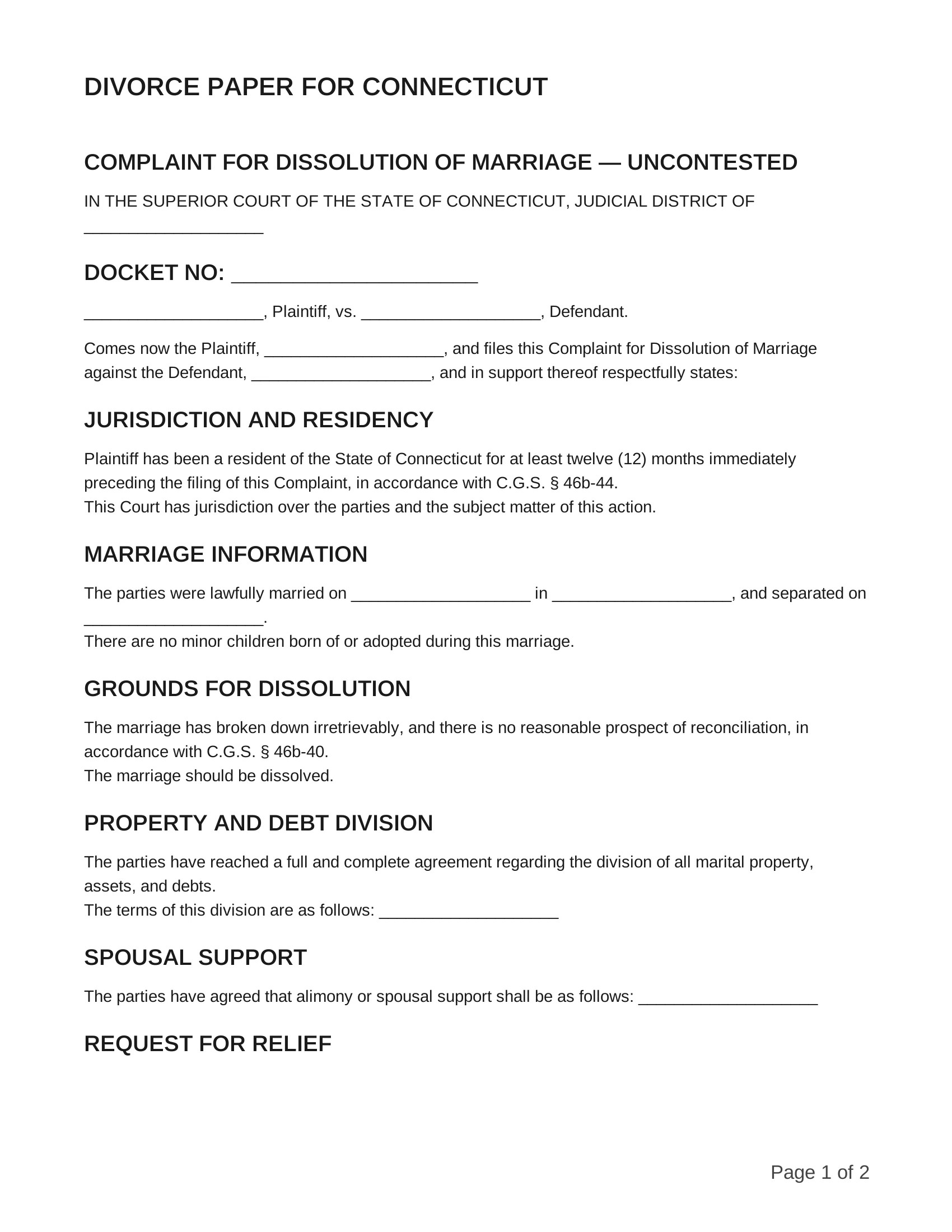
Connecticut is one of the few states that requires a full 12 months of residency before you can even file for divorce. Once the Complaint for Dissolution of Marriage (form JD-FM-159) is filed with the Superior Court in your Judicial District, the court sets a return date, and the mandatory 90-day waiting period runs from that date before a judgment can be entered.
The state also uses a concept most places dropped long ago: the return date. It is a procedural deadline that controls the timing of the case, and it is tied directly to the 90-day clock. An uncontested divorce with a signed separation agreement can still finish in four to six months, but the return-date system makes the timeline feel more structured than in other states.
Property is divided equitably, alimony follows the factors in C.G.S. § 46b-82, and child support uses the Connecticut Child Support Guidelines under C.G.S. § 46b-215b. Couples who agree on all terms use the JD-FM-172 settlement agreement form. Filing runs about $360, and all forms come from the Connecticut Judicial Branch.